How sunscreen works on the body

How Does Sunscreen Work?

You know you should wear sunscreen when spending time in the sun, but how does sunscreen actually work? Read on to learn how sunscreen helps protect your skin from harmful UV rays.

Sunscreen helps to protect your skin from the sun’s harmful rays using UV filters. Read on to learn more about how sunscreen works, the different types of UV filters in different sunscreens, and how to properly apply sunscreen to ensure that it’s effective.

What does sunscreen do?

The short answer is an obvious one – it helps protect our skin from the sun, but how does it do that and are there other benefits that sunscreen can offer?

All sunscreen contains UV filters that work together to help protect your skin from the UVA/UVB rays produced by the sun. Depending on the formula, certain sunscreens may also offer other skin benefits, like skin hydration or helping to reduce the appearance of sun-induced dark spots.

What are UV filters and how do they work?

UV filters (ultraviolet filters) are ingredients in sunscreen that protect your skin from harmful UV radiation by absorbing, reflecting, and/or scattering UV radiation1. While they all accomplish the same goal, there are a couple of different types of UV filters that work in different ways.

Woman smiling

Physical (mineral) UV filters2:

The way that physical UV filters help protect the skin from the sun is by reflecting and scattering UV rays. These inorganic compounds effectively form a barrier on the skin’s surface so when UV rays reach the skin, they’re bounced off of the filters like a mirror. Sunscreens containing physical UV filters are also sometimes referred to as mineral sunscreens.

Chemical UV filters2:

Chemical UV filters are compounds that soak up UV light hitting the skin and then convert it into thermal energy. Some chemical filters protect against UVA rays and some against UVB rays1. When purchasing a sunscreen, it's important to look for one that specifies broad-spectrum coverage, meaning it helps protect the skin against both UVA and UVB rays.

Which type of UV filter to choose:

Both types of UV filters are effective, so it comes down to personal preference. Some people with sensitive skin may find that the chemical ‘absorber’ filters irritate their skin and may elect to use a mineral sunscreen instead.

Regardless of what type of sunscreen you choose, ensure that you’re choosing one that provides broad-spectrum coverage.

Won’t sunscreen clog my pores?

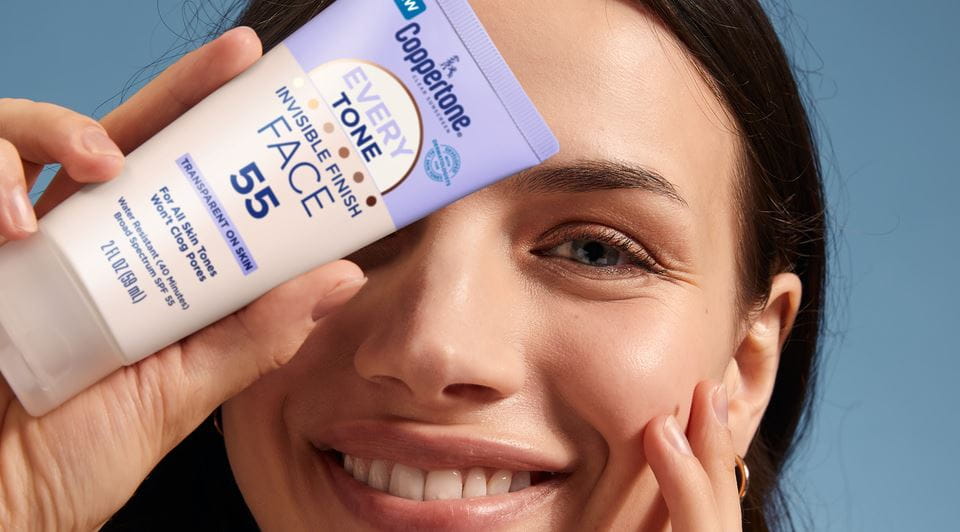
The fear of sunscreen clogging pores can deter some people from giving themselves the sunscreen protection from the sun that they need. Thankfully, there are many sunscreens available in lightweight formulas that deliver the benefits of SPF without clogging pores, such as Coppertone Hydrating UV Defense Face Sunscreen Lotion SPF 60+.

The different types of UV rays

The sun emits UV rays that can be damaging to the skin. Broad-spectrum Sunscreen helps protect against UVA and UVB rays, but what are they?

UVA Rays:

UVA rays are responsible for tanning (which is actually a form of sun damage!). UVA rays contribute to early signs of aging such as wrinkles and dark spots, and can increase the likelihood of developing skin cancer3.

UVB Rays:

UVB rays affect the outer layers of the skin which causes visible damage in the form of a sunburn. These UV rays are also associated with an increased risk of skin cancer3.
Young woman taking UVA & UVB Rays

What is SPF?

SPF (Sun Protection Factor) indicates how well a sunscreen protects your skin from UVB rays. According to the American Academy of Dermatology, dermatologists recommend using sunscreen that has at least SPF 30, as this stops 97% of UVB rays from the sun. Higher SPFs protect the skin marginally more from the sun, but no sunscreen, no matter how high the SPF, can block 100% of the sun’s UVB rays3.

When should you apply sunscreen?

SPF (Sun Protection Factor) indicates how well a sunscreen protects your skin from UVB rays. According to the American Academy of Dermatology, dermatologists recommend using sunscreen that has at least SPF 30, as this stops 97% of UVB rays from the sun. Higher SPFs protect the skin marginally more from the sun, but no sunscreen, no matter how high the SPF, can block 100% of the sun’s UVB rays3.
  • In the morning
    Always apply sunscreen to any exposed areas of skin at least 15 minutes before going outside (or if exposed to the sun through glass, as UVA rays can pass through windows3). It’s important to wear sunscreen even on cloudy days as the sun's rays can still penetrate through clouds, and to use as directed. 

  • Throughout the day if swimming or sweating
    Make sure to use a water-resistant sunscreen if swimming or sweating, and reapply at least every 2 hours, following the directions on your sunscreen’s packaging.

  • After you've exercised or gone swimming
    Water-resistant sunscreens aren’t waterproof, so if you're likely to become sweaty or going swimming, you should always reapply once you've dried off.

Who should wear sunscreen?

Everybody should wear sunscreen! Whether you’re naturally fair-skinned or have darker skin, whether you’re young or have aging skin, wearing sunscreen is just one of many sun protection measures you should take to help protect your skin.

Don’t just rely on sunscreen for sun protection

Applying sunscreen is just one component of sun protection. Be sure to use sunscreen in conjunction with other sun protection measures such as wearing protective clothing like hats, sunglasses, long pants and long sleeves when possible, seeking shade when outside, and avoiding sun exposure during peak hours of the day.

Coppertone sunscreens

Coppertone offers sun protection for every moment. Voted the most trusted sunscreen brand in the US*, Coppertone has provided continuous sun protection innovation for over 75 years.

Whether you require durable SPF for sport, mineral SPF for sensitive skin, sunscreen for babies and kids, moisturizing sun protection for the whole family, or something for an extra shimmer and glow – Coppertone's range has you covered.

Browse the range of Coppertone sunscreens to find those suited for your needs.

*Voted Most Trusted Adult Sunscreen Brand by American Shoppers Based on the 2024 BrandSpark American Trust Study.

Sources

1. Introduction to Sunscreens and Their UV Filters. www.ncbi.nlm.nih.gov. https://www.ncbi.nlm.nih.gov/books/NBK587270/.
2. Sabzevari, N.; Qiblawi, S.; Norton, S.; Fivenson, D. Sunscreens: UV Filters to Protect Us: Part 1: Changing Regulations and Choices for Optimal Sun Protection. International Journal of Women’s Dermatology 2021, 7 (1), 28–44. https://doi.org/10.1016/j.ijwd.2020.05.017.
3. American Academy of dermatology Association. Sunscreen FAQs. www.aad.org. https://www.aad.org/media/stats-sunscreen.