How sunscreen works on the body

Premature Aging – Is the Sun Making Your Skin Look Older?

Sun exposure is a leading cause of premature skin aging. Learn more about premature aging and how to help protect your skin from the sun.

Premature aging in the skin – what it is and what to do about it

Aging skin is an inevitable part of growing older - we will all begin to experience it at one point or another. However, there are certain lifestyle choices and environmental factors that can contribute to signs of premature aging - skin looking older sooner. Read on to learn more about what impacts premature aging in the skin and whether it’s possible to help prevent or slow it.

Premature skin aging – common signs of skin aging

Skin aging is the term attributed to the natural process that skin goes through as we age.

Signs of skin aging include:

Woman smiling

Loss of skin elasticity

When we’re young, our skin contains a plentiful supply of Collagen and Elastin. These proteins provide skin with firmness, elasticity, and flexibility. As we age, Collagen and Elastin levels in the skin naturally begin to decrease, reducing skin’s firmness and elasticity1.

Fine lines and wrinkles on the face

Elasticity loss combined with creases caused by movement and facial expressions over time leads to the development of fine lines and wrinkles, particularly around the eyes, nose, and mouth2.

Dark spots and uneven skin tone

As we age, the skin can develop an uneven tone and dark spots, particularly on areas most frequently exposed to the sun including the face, neck, chest, hands, and forearms3.

Dry skin

Our skin contains Hyaluronic Acid which helps bind moisture and keep skin hydrated. As we age, our body produces less Hyaluronic Acid, leaving skin more prone to dryness. Dehydrated skin can also contribute to the appearance of temporary fine lines4.

What causes premature skin aging?

While age-related skin changes due to intrinsic factors like genetics5 are unavoidable, external factors contribute to signs of accelerated aging in the skin, many of which can be prevented or, at least, minimized.

How external factors contribute to premature aging in the skin

External contributors of skin aging like certain lifestyle choices and environmental factors cause an imbalance in the skin known as oxidative stress. This imbalance releases free radicals that damage the skin and contribute to skin’s loss of collagen, elastin, and hyaluronic acid, which in turn contributes to loss of skin elasticity and dryness.

External causes of premature skin aging

Common external causes of premature skin aging include:

  1. Sun exposure: Damage from the sun’s harmful UV rays is one of the primary causes of premature skin aging caused by the sun, also known as photoaging. Cumulative sun damage can lead to early development of wrinkles, dryness, and uneven skin tone due to sun-induced dark spots. Prolonged and repeated sun exposure causes damage to collagen, resulting in a weakened skin structure that wrinkles more easily6.
  2. Pollution: Environmental pollution triggers the release of free radicals and accelerates oxidative stress in the skin7.
  3. Smoking: Smoking triggers oxidative stress and can contribute to premature development of fine lines and wrinkles6. Smoking can also lead to premature development of wrinkles around the mouth from the repeated expression of pursing the lips over time.
  4. Lack of sleep: When you haven’t gotten a good night’s sleep, you might feel like you ‘look older’ due to temporary puffiness around your eyes, but there actually may be some truth in that statement over time. The skin needs sleep to repair and regenerate, and poor sleep has been associated with an increase in signs of skin aging and compromised skin barrier function8.  
Young woman taking UVA & UVB Rays

How to help prevent premature aging in the skin

When it comes to premature aging and your skin, prevention is key. Here are several ways you can help prevent an early onset of fine lines, wrinkles, and uneven skin tone due to external factors:

Help prevent photoaging - protect your skin from the sun’s harmful UV rays

Since sun exposure is such a significant contributor to signs premature aging in the skin, using proper sun protection is a relatively simple and effective way to help keep premature wrinkles and other signs of early skin aging at bay. To help prevent signs of photoaging, use a daily sunscreen with an SPF of at least 30 in conjunction with other sun protection measures such as wearing protective clothing (hats, long pants/sleeves, sunglasses), seeking shade while outdoors, and avoiding sun exposure during peak times of the day. Be sure to apply sunscreen properly and reapply at least every 2 hours, following directions on the packaging.

Coppertone® Sport Face Lotion SPF 60 is lightweight and stays on strong when you sweat. This breathable formula rubs on easily and provides Broad Spectrum UVA/UVB SPF 60+ sun protection, stopping up to 98% of damaging UV rays. This non-greasy sunscreen lotion won't clog pores, blends in clear on all skin tones, and is formulated with antioxidants vitamins E and C. It is free of Oxybenzone, Octinoxate, PABA, Parabens, Phthalates, and fragrance. Coppertone Sport Face Lotion 60+ is water resistant (80 minutes) and dries quickly.

Think you’re getting a safe tan because you’re going to a tanning salon instead of exposing yourself to the sun? Believe it or not, you can also experience photoaging from the UV rays in artificial sunlight from tanning beds9, so be sure to avoid those as well.

Quit smoking 
Protect your skin (and your overall health) by quitting smoking. If you aren’t a smoker, don’t become one! Your skin (and lungs) will thank you.

Get sufficient, high-quality sleep 
They don’t call it beauty sleep for nothing! Give your skin the time it requires to repair by getting adequate sleep. Prioritize not only the quantity but the quality of your sleep to help support skin health.

Premature skin aging facts summary

Appearance: Premature skin aging can show up as fine lines and wrinkles, uneven skin tone, and sun-induced dark spots on the skin.

Causes: Cumulative and prolonged exposure to ultraviolet (UV) rays from the sun, environmental pollutants, smoking, poor sleep.

Prevention: Sun protection including consistent, daily use of a broad-spectrum sunscreen with a high SPF, wearing protective clothing and seeking shade; avoiding environmental pollutants; quitting (or not starting) smoking; getting adequate and high-quality sleep.

Management: Using a broad spectrum sunscreen with an SPF value of at least 15 as directed, and other skincare products, designed to help reduce the appearance of fine lines, wrinkles, or sun-induced dark spots, and practicing sun safe measures including limiting your time in the sun, and wearing protective clothing.

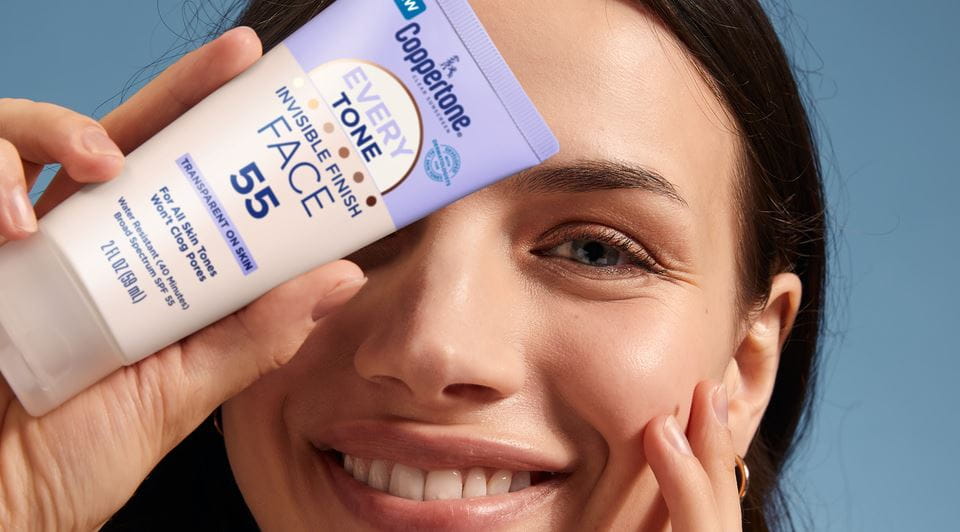
Coppertone offers a full line of sunscreen to help protect your skin from the sun’s harmful UV rays.

Disclaimer: The information provided herein is not intended to be medical advice, nor is it intended to treat an underlying skin disease or condition. The information is provided for educational purposes only on the benefits of sunscreen usage.

Sources

  1. Farage, M. A.; Miller, K. W.; Elsner, P.; Maibach, H. I. Characteristics of the Aging Skin. Advances in Wound Care 2013, 2 (1), 5–10. https://doi.org/10.1089/wound.2011.0356.
  2. Cleveland Clinic. Wrinkles & Fine Lines: Types, Causes & Prevention. Cleveland Clinic. https://my.clevelandclinic.org/health/diseases/10984-wrinkles.
  3. Rittie, L.; Fisher, G. J. Natural and Sun-Induced Aging of Human Skin. Cold Spring Harbor Perspectives in Medicine 2015, 5 (1), a015370–a015370. https://doi.org/10.1101/cshperspect.a015370.
  4. Bravo, B.; Correia, P.; Gonçalves Junior, J. E.; Sant’Anna, B.; Kerob, D. Benefits of Topical Hyaluronic Acid for Skin Quality and Signs of Skin Aging: From Literature Review to Clinical Evidence. Dermatologic Therapy 2022, 35 (12). https://doi.org/10.1111/dth.15903.
  5. Ng, J. Y.; Chew, F. T. A Systematic Review of Skin Ageing Genes: Gene Pleiotropy and Genes on the Chromosomal Band 16q24.3 May Drive Skin Ageing. Scientific Reports 2022, 12 (1), 13099. https://doi.org/10.1038/s41598-022-17443-1.
  6. Cleveland Clinic. Wrinkles & Fine Lines: Types, Causes & Prevention. Cleveland Clinic. https://my.clevelandclinic.org/health/diseases/10984-wrinkles.
  7. Martic, I.; Jansen-Dürr, P.; Cavinato, M. Effects of Air Pollution on Cellular Senescence and Skin Aging. Cells 2022, 11 (14), 2220. https://doi.org/10.3390/cells11142220.
  8. P, O.-W.; A, S.; B, K.; Ms, M.; D, Y.; Kd, C.; Ed, B. Does Poor Sleep Quality Affect Skin Ageing? Clinical and experimental dermatology. https://pubmed.ncbi.nlm.nih.gov/25266053/.
  9. American Academy of Dermatology Association. 10 surprising facts about indoor tanning. www.aad.org. https://www.aad.org/public/diseases/skin-cancer/surprising-facts-about-indoor-tanning.