Man and woman outdoors with soccer ball and Coppertone Sport sunscreen bottle

Sunscreen for Athletes: Finding the Best One for You

Athletes require durable sun protection made for an active lifestyle. Learn what to look for when choosing a sunscreen for the sport you play.

Sunscreen for athletes: why it’s important

When you play an outdoor sport or enjoy any type of athletic outdoor activity, you don’t want the harmful effects of sun exposure holding you back. Even on cloudy or winter days, the sun’s harmful UV rays can cause damage to the skin1[LA1] , which can not only cause more immediate discomfort in the form of a burn, but can contribute to longer-term problems like photoaging[LA2] , sun spots, and an increased risk of skin cancer2[LA3] .

For athletes who spend a lot of their time outdoors such as runners, golfers, surfers, rock climbers, skiers, hikers, and team sports players, finding an effective sport sunscreen can help keep skin protected so you can concentrate on the game, and not on your skin.

How does sunscreen work?

Sunscreen helps protect skin from the sun’s harmful UV rays in one of two ways, depending on the type.

Chemical sunscreens are the most popular type of sunscreen and help protect the skin with chemical UV filters[JH4]  like Avobenzone, Octinoxate and Oxybenzone that absorb the sun’s UV rays3[LA5] .


Mineral sunscreens, sometimes referred to as physical sunscreens, stay on the surface of the skin and absorb and deflect the sun's UV rays[JH6] . Mineral UV filters[JH7]  like Zinc Oxide or Titanium Dioxide partly bounce back the UVA and UVB rays, with the remainder being scattered or absorbed by the mineral particles3[LA8] .

Learn more about the difference between mineral and chemical sunscreen and how sunscreen works.

While the type of sunscreen you choose comes down to personal preference, it can only protect you if it’s applied properly and frequently. Be sure to follow the instructions on your sunscreen’s drug facts box for application and reapplication directions.

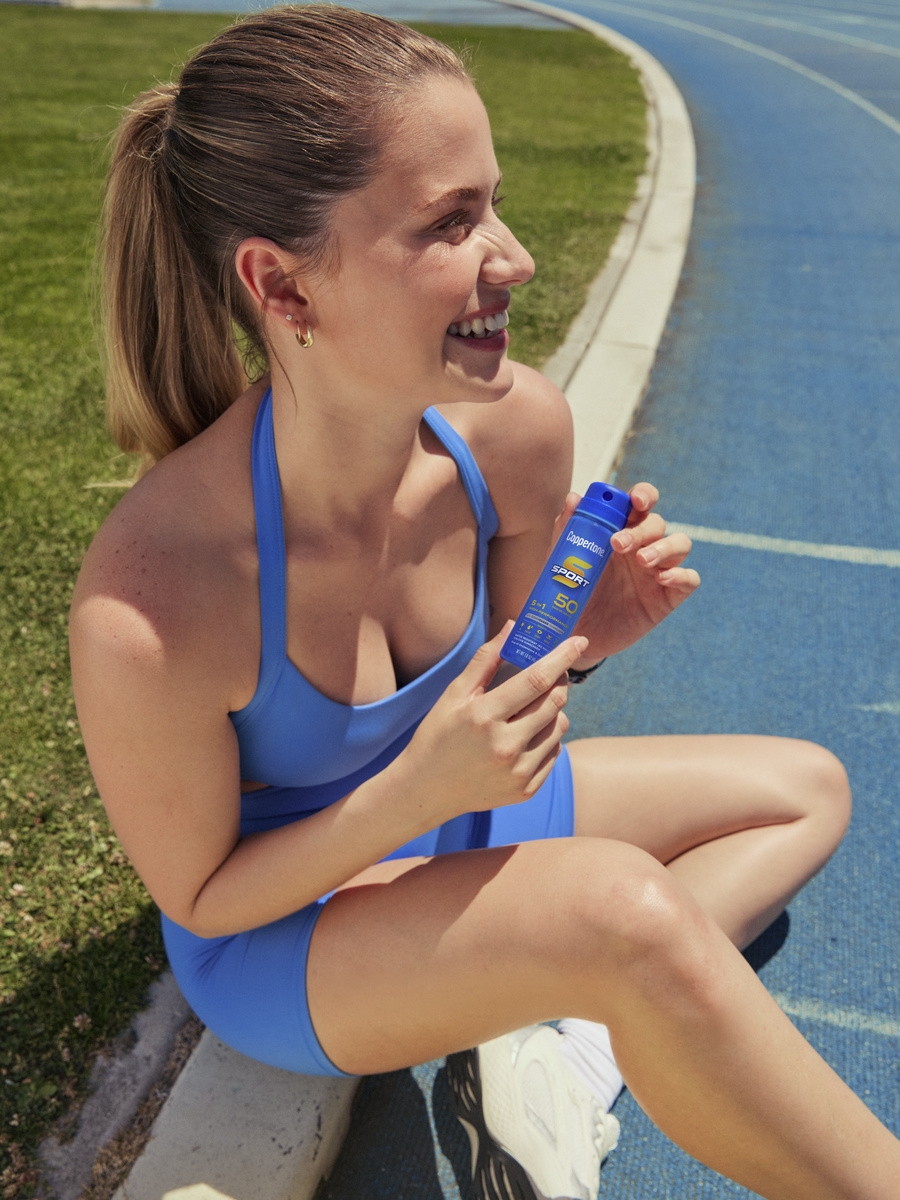
Woman sitting on a running track holding a Coppertone sunscreen bottle

How to choose the best sunscreen for outdoor sports

When looking for an effective sport sunscreen, you want to find a product that offers durable protection and portability to suit your active lifestyle, and water resistance if you’ll be swimming or sweating. Here are some things to look for when choosing the right sport sunscreen for you:

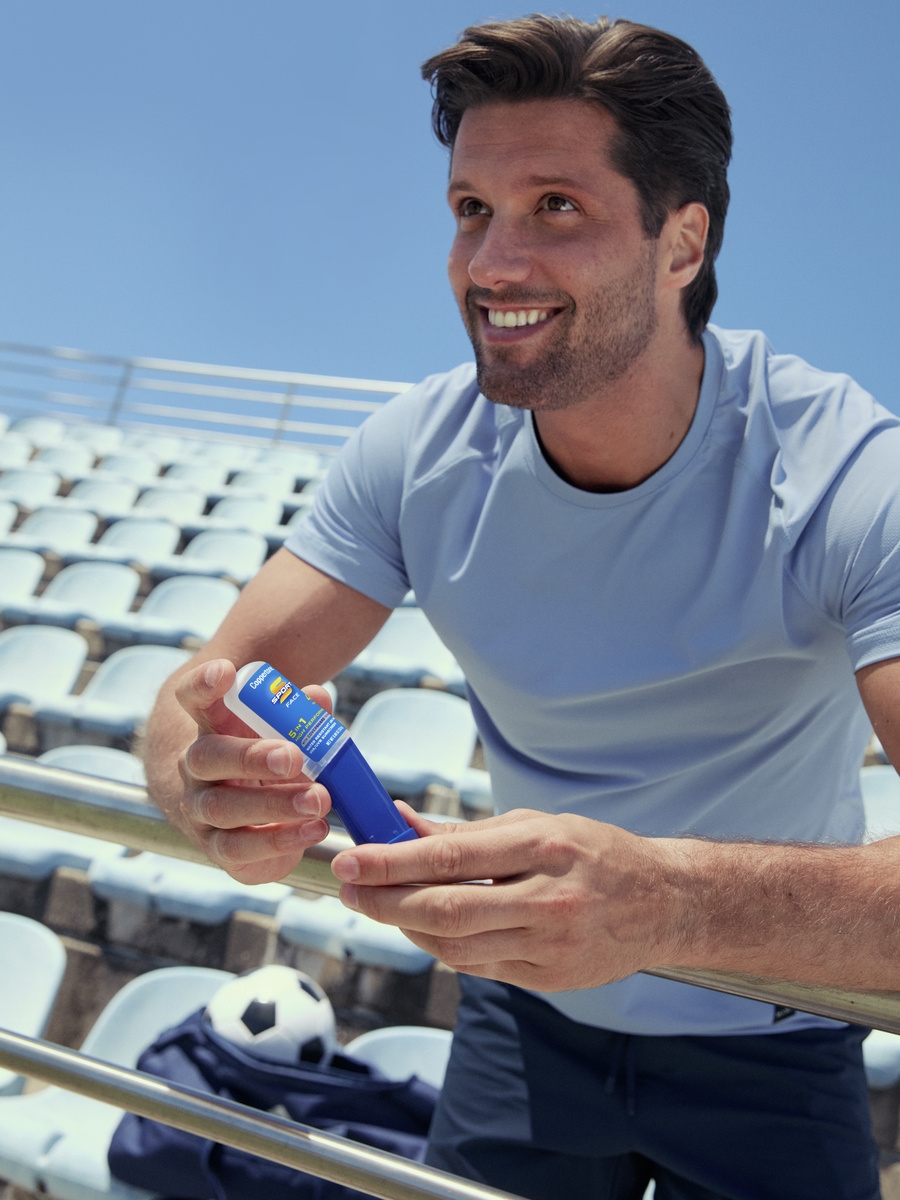
Smiling man holding Coppertone Sport sunscreen stick at a stadium

Adequate SPF

When choosing any sunscreen, make sure to choose a sunscreen that offers broad-spectrum protection (protection against both UVA and UVB rays) and an adequate SPF. SPF, short for Sun Protection Factor, measures the percentage of UVB rays that a sunscreen stops from affecting your skin.

  • SPF 15 stops up to 93% of UVB rays
  • SPF 30 stops up to 97% of UVB rays
  • SPF 50 stops up to 98% of UVB rays4[LA10] [JH11]

The higher the number, the higher the percentage of stopped UVB rays, but there is no SPF that can completely stop or block[JH12]  100% of the sun’s UVB rays, no matter how high the number. This is why it’s important, in conjunction with wearing sunscreen, to take other sun protection precautions such as avoiding direct sun exposure during peak hours of the day, seeking shade when possible, and covering up with protective clothing, hats, and sunglasses.


What SPF is recommended for outdoor sports?

SPF is a personal choice that comes down to your skin’s unique needs and your desired coverage level. Regardless of the SPF chosen, for outdoor sports, it will be important to be sure to adequately apply your sunscreen and regularly re-apply for as long as you’re spending time outdoors during daylight hours.


Portability

Whether you’re traveling for a game, heading to the beach, or packing your hiking gear, you want to make sure your sunscreen can easily come with you and be applied at a moment’s notice. Having convenient options like carrying a travel-sized sport sunscreen or an easy-to-apply sport sunscreen spray in your [DH13] bag can help you keep your sun protection within arm’s reach and make it part of your pre-game routine.

For a convenient, travel-sized sport sunscreen option, try Coppertone® Sport 4-in-1 Performance Sunscreen, available in SPF 50 and SPF 100. This broad-spectrum sunscreen is designed to stay on strong when you sweat, and protects you from the sun with a durable and water-resistant, moisturizing sunscreen formula (80 minutes). [JH14] [MM15]

Prefer a spray? Coppertone® Sport 4-in-1 Performance Sunscreen Spray is on your team. Available in SPF 15, SPF 30, SPF 50, SPF 70, and SPF 100. This[HM16] [AH17]  durable sport sunscreen spray offers the same benefits of water resistance (80 minutes) as the lotion, but in a convenient, moisturizing spray format.
Use and reapply all Coppertone® sunscreens as directed.
Female athlete wearing sunglasses running on a blue track outdoors
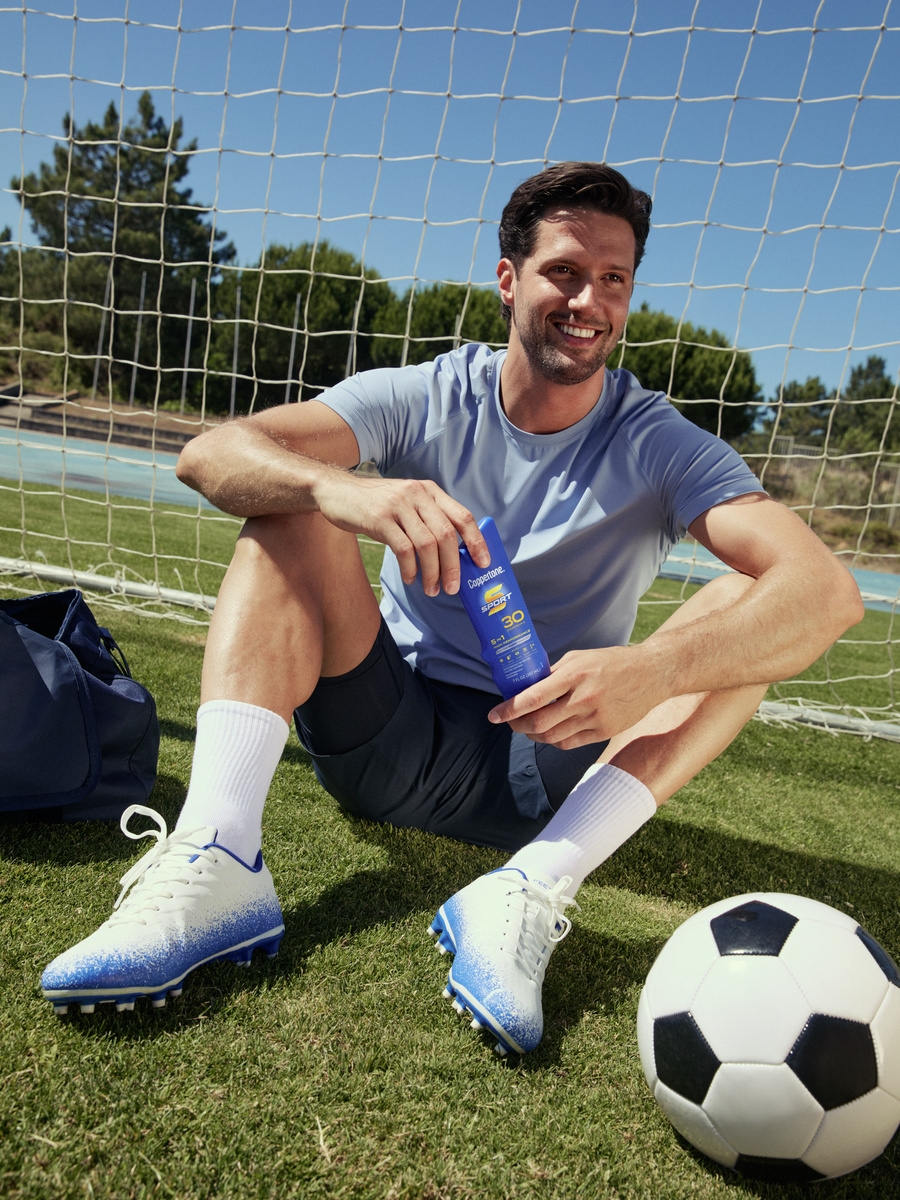
Smiling soccer player sitting on grass with a football and Coppertone Sport sunscreen bottle

Water and Sweat-Resistance

Durable sunscreen that can resist sweat, heat and water [MM18] is one of the most important things to look for in a sunscreen for athletes. With any type of physical activity, you’re likely to work up a sweat[LA19] . If your sunscreen can’t hold up to sweat [MM20] or is easily wiped away, your skin can be more vulnerable to the harmful effects of the sun. Whether your activities are on land or in the water, look for a sport sunscreen that offers water resistance to help keep you protected.

All of Coppertone’s Sport sunscreen lotions and sprays offer water resistance up to 80 minutes, for durable sun protection that keeps up with you.

Note that even with a water-resistant sunscreen, reapplication after swimming[LA21] , sweating[LA22] , or toweling off is important! Be sure to follow the guidelines on the sunscreen’s packaging for application instructions.

Coverage

Regardless of the weather, you should apply a broad-spectrum sunscreen to all areas of exposed skin daily[LA23] when spending time outdoors. For some sports like golf, this may mean you’re primarily covering your forearms, face, and neck. For others like swimming, you may be applying sunscreen over most of your body. Choose a sport sunscreen that works best for your skin’s needs and the area you’re covering.

For example, for your arms and legs, you may choose an all-over sunscreen like Coppertone® Sport SPF 30 Lotion for lightweight, broad-spectrum UVA/UVB protection in a water resistant formula (80 minutes), but you may want a facial sunscreen to use on your face and neck that offers higher SPF in a formula specifically meant for use on the face. While you can certainly apply an all-over sunscreen to your face as well, the sunscreen(s) you choose will depend on your skin’s needs and personal preference.


Face sunscreen for athletes

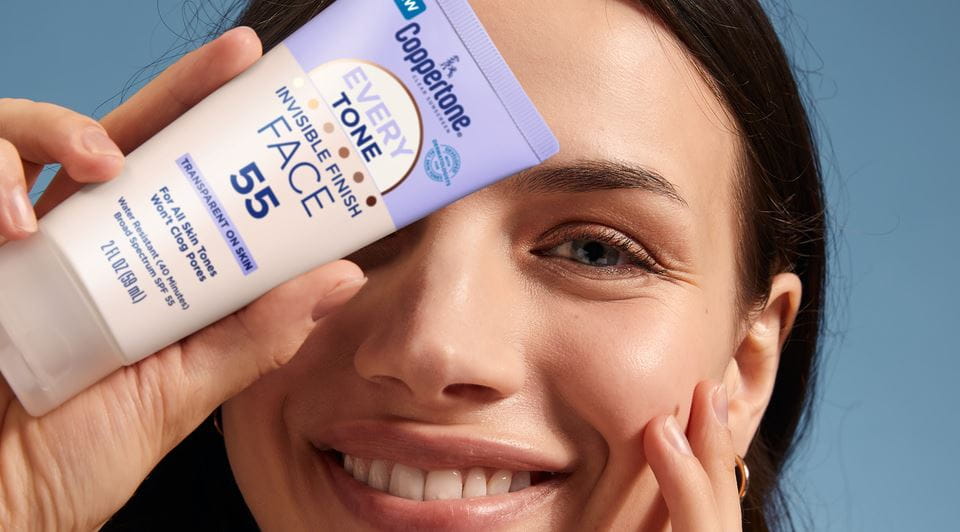
Coppertone® Sport Face Sunscreen Lotion is lightweight and stays on strong when you sweat. This breathable formula rubs on easily and provides Broad Spectrum UVA/UVB SPF 60+ sun protection, stopping up to 98% of damaging UV rays. This non-greasy sunscreen lotion won't clog pores, blends in clear on all skin tones, and is formulated with antioxidants vitamins E and C. It is free of Oxybenzone, Octinoxate, PABA, Parabens, Phthalates, and fragrance. Coppertone Sport Face Lotion 60+ is water resistant (80 minutes) and dries quickly.

Soccer player balancing a football on his knee under the sun
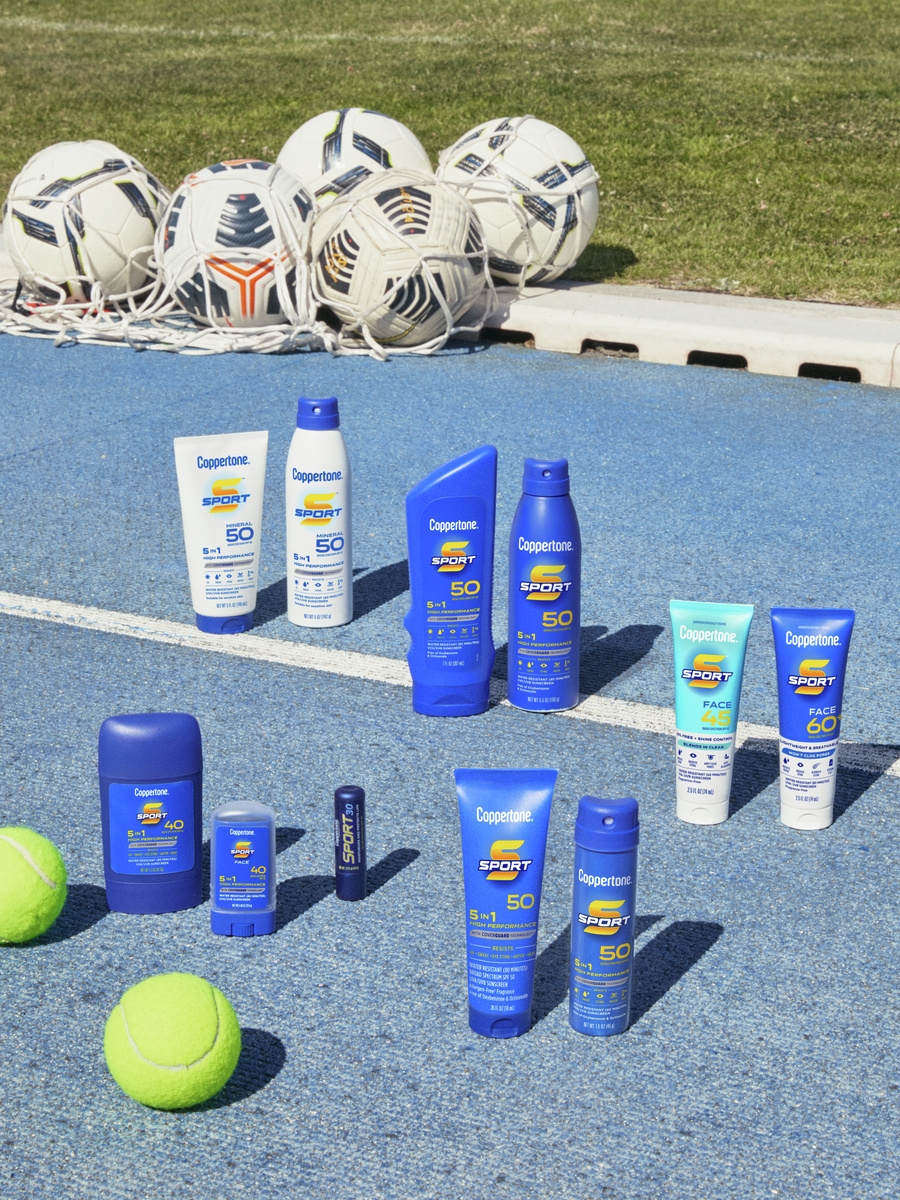
A collection of Coppertone Sport sunscreen products on an outdoor track with tennis balls and soccer balls

Compatibility with your skin type

While chemical sunscreens are the most common sunscreen, sometimes people with sensitive skin [LA24] prefer to use mineral sunscreens. When choosing a sport sunscreen, look for a formula that works with your skin’s needs.

Coppertone® Sport sunscreens are suitable for all skin types and come in both chemical and mineral formulas to accommodate personal preference.

For mineral sunscreens for athletes, try Coppertone® Sport Mineral Sunscreen. Designed to stay on strong when you sweat, this high-performance mineral sport sunscreen provides broad spectrum SPF 50 UVA/UVB protection in a durable and water resistant formula (80 minutes) formulated with 100% naturally sourced Zinc Oxide. Also available in an SPF 50 spray.

How to apply sunscreen – tips for athletes

When you’re getting ready to head out onto the field, court, or track, it can be easy to forget to apply sunscreen when you’re in a rush. For athletes, finding a way to quickly but thoroughly apply sunscreen is an important way to keep your time spent outdoors fun and healthy for your skin. Here are some sunscreen application tips for athletes:


Apply sunscreen thoroughly to all exposed areas of skin

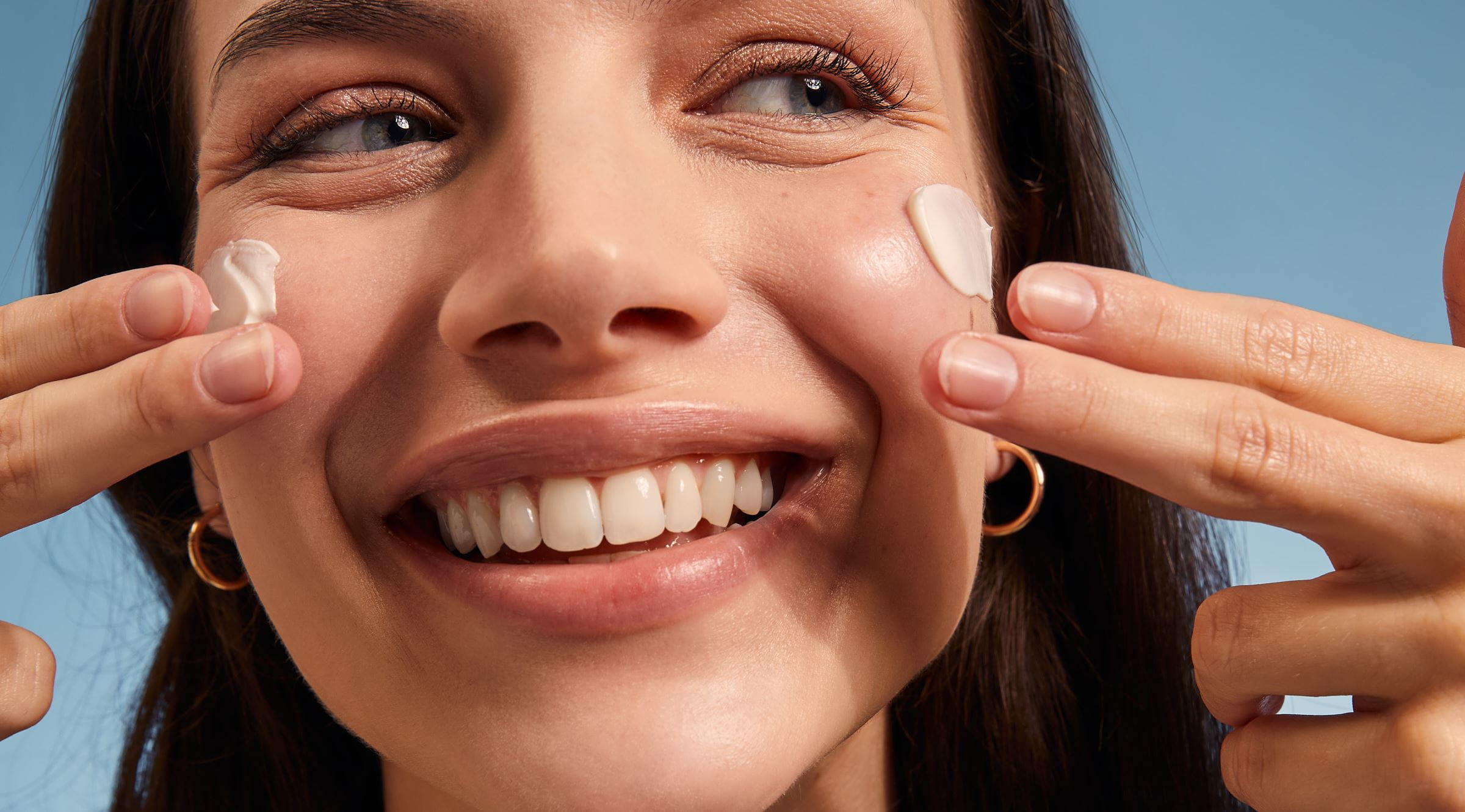
For lotion-based sunscreens, use approximately 1oz. (the equivalent of two tablespoons, or a shot glass) for the skin on your body, and at least a nickel-sized amount for your face, neck, and ears5[LA25] , using more if needed to ensure proper coverage of all exposed areas. Apply sunscreen liberally, rubbing onto the skin until you see it blend with your skin tone. For sunscreen sprays, follow directions on the packaging for proper amount, duration, and distance from the skin while spraying. After spraying onto the skin, rub to ensure even, thorough coverage, and always spray onto hands to apply onto your face as opposed to spraying directly onto your face.


Reapply at least every[HM26]  two hours, more frequently if swimming, sweating, or toweling off

When it comes to sunscreen application frequency, it’s better to reapply more often than to wait too long and potentially get sunburned[MM27] . General guidelines advise reapplying sunscreen at least as often as every two hours6[LA28] , but if you’re swimming, sweating, toweling dry, or otherwise getting wet or rubbing your skin, you will want to be sure to reapply afterward, even if using a water-resistant sunscreen.


Don’t miss a spot

Certain areas of the body can be easy to overlook when applying sunscreen, such as the ears, hair parts or more thinly covered spots on the scalp, backs of the hands and tops of the feet/toes. Another often overlooked part of the body when it comes to sun protection is the lips. Be sure to apply a moisturizing lip balm with SPF to help protect lips from the sun.[MM29] [AH30]

For more tips for how to apply sunscreen, read our How to Use Sunscreen: Application FAQs guide.

What are the benefits of wearing sports sunscreen?

Many of the benefits of sport sunscreen align with other sunscreens since it helps to protect the skin from the sun’s harmful UV rays. Depending on the formula, some sunscreens may also offer additional benefits such as moisturization.

Some sport sunscreens may offer additional benefits such as:

  • Water-resistance
  • Lightweight, quick-drying formulas
  • Convenient sizes and formulas for easy travel and on-the-go application
  • Durable sun protection in both chemical and mineral formats

Should you wear sunscreen during sports?

If you participate in an outdoor sport or activity during the day, you will want to apply sunscreen to all exposed areas of the skin. Even on overcast days, it’s important to incorporate sunscreen in an overall sun protection strategy, whether you’re on the field or cheering in the stands.

Should you wear sunscreen while running?

For runners, wearing sunscreen is essential. Whether you’re taking a casual morning jog or running a marathon, staying protected from the sun is crucial when running outdoors.

The best type of sunscreen for runners

Runners benefit from sunscreen that is durable and water-resistant, as running, even in colder weather, can cause significant sweating . You’re also at the mercy of the elements while running outdoors and may encounter a range of weather over the course of a run. Knowing that your sunscreen isn’t going to run off at the first drop of sweat or rain can help you stay focused on beating your PR instead of worrying about losing your sunscreen’s protection.


Sun protection tips while running

  • Apply sunscreen at least 15 minutes before you head out for your run to give the sunscreen the chance to settle onto your skin.  Don’t forget to protect your lips with a sunscreen lip balm.
  • If you’re going on a long run (longer than 2 hours), or if you anticipate significantly sweating or encountering precipitation during the run, be prepared to stop and reapply sunscreen.
  • Carry a travel-sized sport sunscreen with you while running to make reapplication quick and easy without weighing you down.
  • Supplement sunscreen protection with other sun protection measures such as covering as much of your skin as is comfortable with protective clothing, wearing a hat, and sunglasses
  • Opt to run during times of day where the sun isn’t at its peak, such as the early morning or late afternoon or evening
  • Check the UV index for your area and consider doing an indoor workout or waiting until a later part of the day on days when the UV index is particularly high
  • Seek shade when you can, choosing routes that offer some relief from direct sunlight if you are running during peak hours of the day
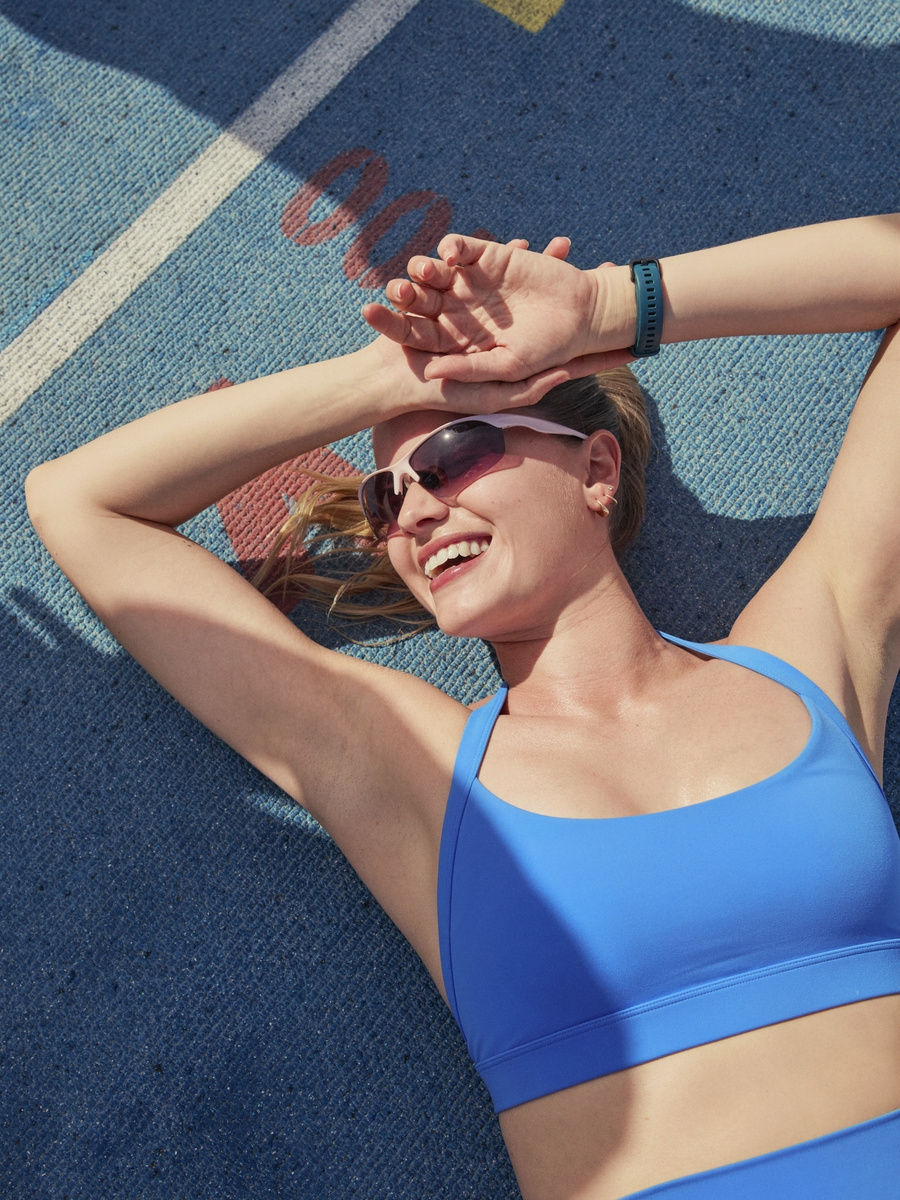
Female athlete resting on a track under the sun with arms above her head

Enjoying outdoor athletic activities with Coppertone® Sport

Coppertone’s Sport line of sunscreens is ready to take on the day with you, no matter the sport! With durable, water-resistant formulas available in a variety of convenient sizes and formats, Coppertone® Sport sunscreen is here to make sun protection for athletes easy.
Disclaimer: The information provided herein is not intended to be medical advice, nor is it intended to treat an underlying skin disease or condition. The information is provided for educational purposes only on the benefits of sunscreen usage.

Sources

References

  1. The Skin Cancer Foundation Shares Winter Sun Protection Tips. The Skin Cancer Foundation. https://www.skincancer.org/press/the-skin-cancer-foundation-shares-winter-sun-protection-tips/
  2. Cleveland Clinic. Sun-damaged Skin: Photoaging, Signs, Causes & Treatment. Cleveland Clinic. https://my.clevelandclinic.org/health/diseases/5240-sun-damage-protecting-yourself.
  3. Gabros, S.; Zito, P. M. Sunscreens And Photoprotection. Nih.gov. https://www.ncbi.nlm.nih.gov/books/NBK537164/.
  4. Wilson, B. D.; Moon, S.; Armstrong, F. Comprehensive Review of Ultraviolet Radiation and the Current Status on Sunscreens. The Journal of Clinical and Aesthetic Dermatology 2012, 5 (9), 18.
  5. Skin Cancer Foundation. Ask the Expert: How Much Sunscreen Should I Be Using on My Face and Body? - The Skin Cancer Foundation. The Skin Cancer Foundation. https://www.skincancer.org/blog/ask-the-expert-how-much-sunscreen-should-i-be-using-on-my-face-and-body.
  6. Clinic, C. How Often Should You Reapply Sunscreen? Cleveland Clinic. https://health.clevelandclinic.org/how-often-to-reapply-sunscreen.